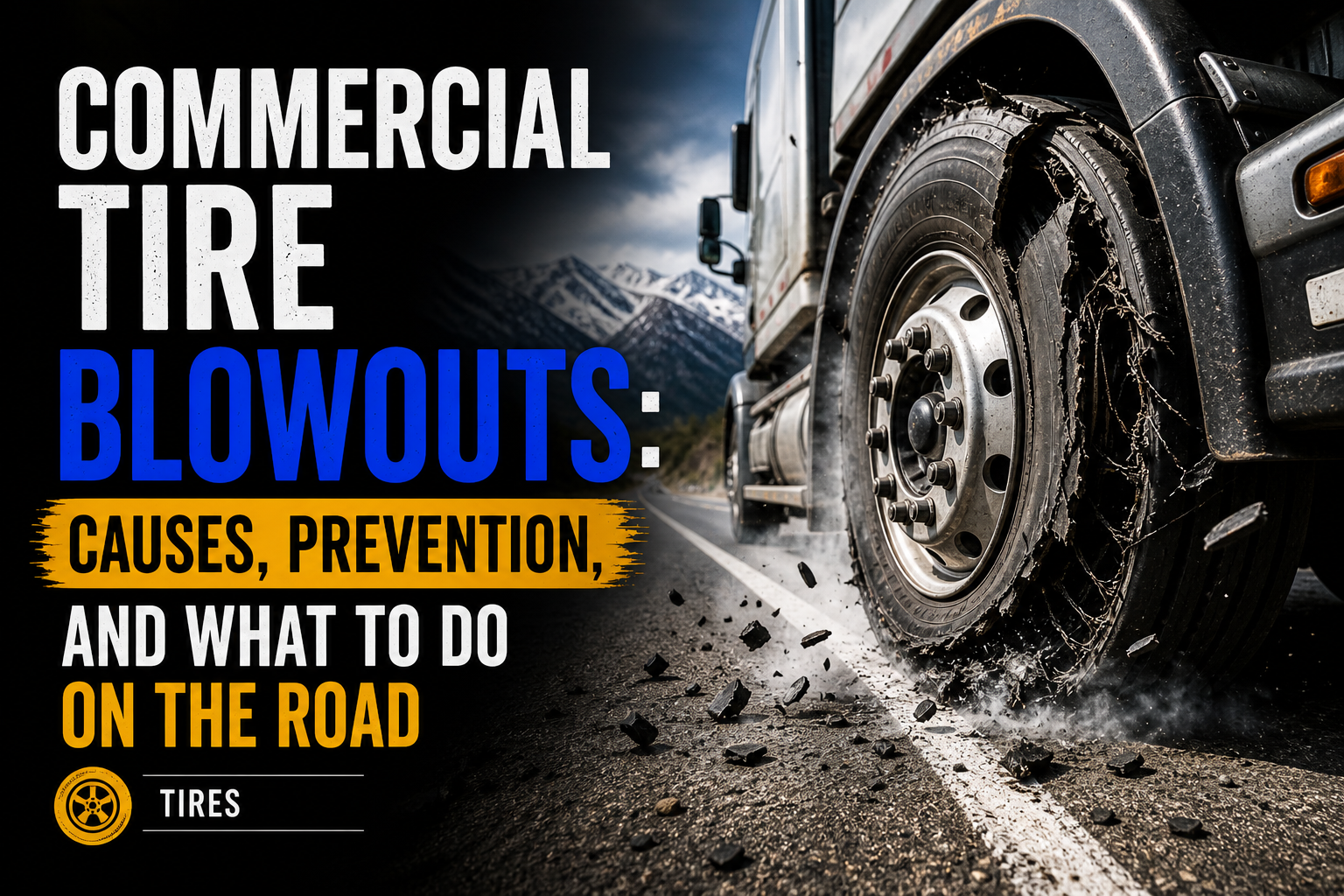
A commercial tire blowout isn't just inconvenient—it's dangerous. A sudden loss of tire pressure on a loaded semi, box truck, or RV can cause a driver to lose control, damage the vehicle, and create a serious hazard for everyone on the road. Understanding why blowouts happen and how to prevent them is essential knowledge for any commercial driver or fleet manager.
The Most Common Causes of Commercial Tire Blowouts
The number one cause of commercial tire blowouts. When a tire runs low on pressure, the sidewalls flex more than they're designed to, generating excessive heat. Over time, that heat breaks down the internal structure of the tire until it fails—often explosively. Regular pressure checks aren't optional — they're a safety requirement.
Every commercial tire has a load rating, and exceeding it puts enormous stress on the tire structure. Drivers and fleet operators need to know the load ratings of their tires and respect them, especially on routes with steep grades or extreme temperatures like those found in the Eastern Sierra Nevada region.
Potholes, debris, and sharp objects can cause immediate punctures or create internal damage that leads to a delayed blowout. A tire that hits a sharp object might look fine externally while the internal cords are compromised.
Prevention: The Keys to Tire Longevity
- Inspect tires before every trip — look for visible damage, abnormal wear patterns, or sidewall bulges. Sidewall bulges mean replace immediately.
- Check tire pressure every morning before driving when tires are cold. Inflate to the manufacturer's specification for your load. Carry a quality pressure gauge and use it.
- Consider a TPMS (tire pressure monitoring system) — a valuable investment, but not a substitute for manual inspection.
- Rotate and balance tires on schedule. Uneven wear shortens tire life and makes vehicles handle unpredictably.
- Have alignment checked regularly — especially after hitting potholes or curbs.
What to Do If a Blowout Happens
- Do not panic and do not slam the brakes. Hold the wheel firmly and ease off the accelerator.
- Let the vehicle slow naturally. Steer in a straight line and gradually work toward the shoulder.
- Only apply brakes gently once you've stabilized and slowed significantly.
- Once safely stopped, assess the damage. Never drive on a blown tire — even a short distance.
- Contact Britt's Diesel for roadside tire assistance if you're in our service area.
We're Here for Your Commercial Tire Needs
From routine inspections and pressure checks to emergency roadside tire repair, Britt's Diesel has the equipment and expertise to handle commercial tires on trucks, trailers, RVs, and fleet vehicles. Located in Bishop, CA — open Monday through Friday.
(760) 872-1883MON – FRI | BISHOP, CA