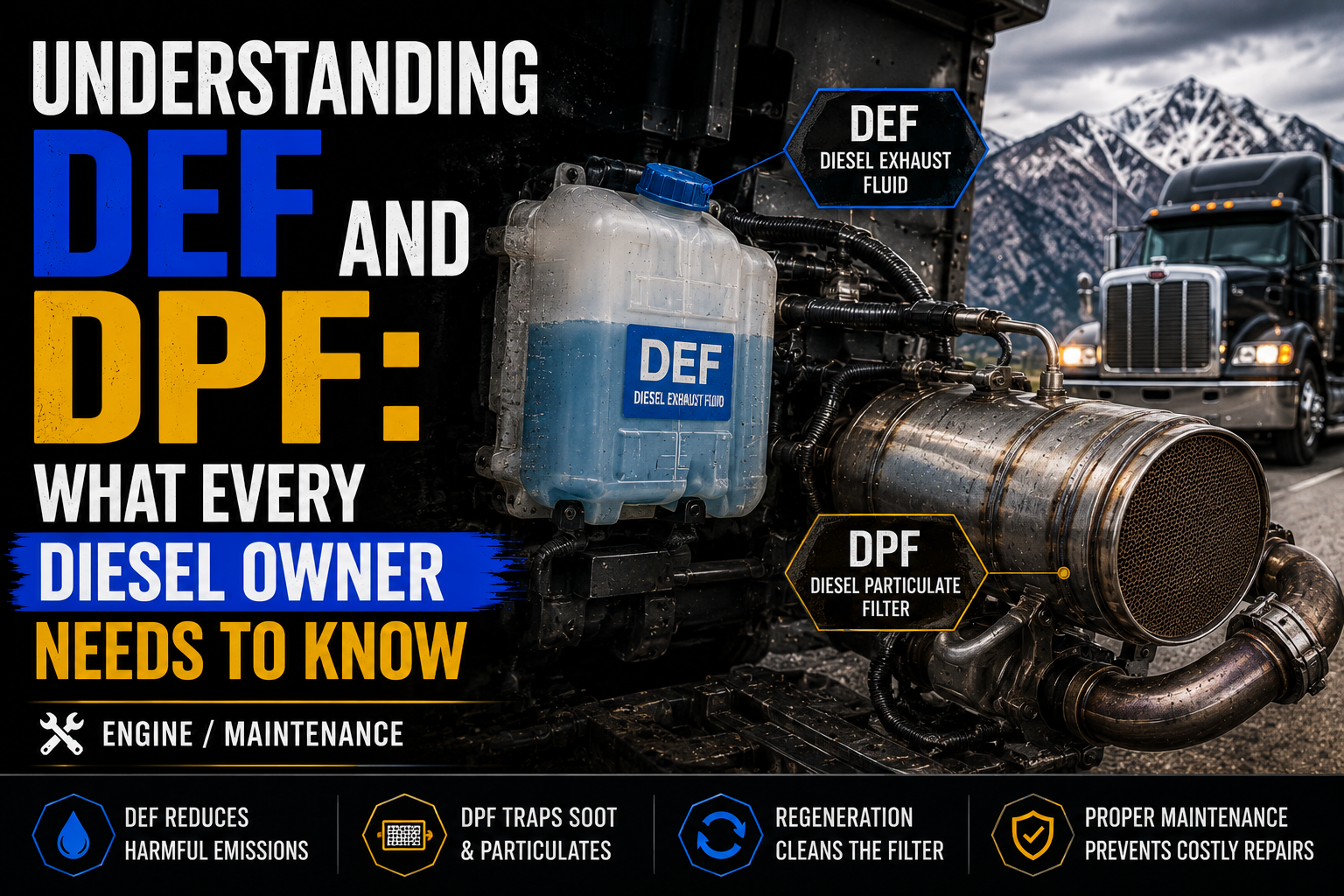
Modern diesel vehicles come equipped with emissions control systems that many owners find confusing—and sometimes frustrating. Two of the most important are the Diesel Exhaust Fluid (DEF) system and the Diesel Particulate Filter (DPF). Understanding how they work and how to maintain them can save you from expensive repairs and unexpected downtime.
A urea and deionized water solution injected into the exhaust stream. Works with the SCR system to convert harmful NOx emissions into harmless nitrogen and water vapor. Required on virtually all diesels built after 2010.
A ceramic honeycomb filter in the exhaust system that captures soot and particulate matter before it exits the tailpipe. Requires periodic cleaning through a process called regeneration.
What You Need to Know About DEF
DEF is consumed separately from fuel—most diesels use about 2–3 gallons of DEF for every 100 gallons of diesel. If your DEF level runs low, you'll see a warning light on your dash. Let it run completely empty and most modern trucks will derate engine power significantly or even shut down to prevent emissions violations. Don't ignore the warning light.
DEF quality matters. Use only ISO 22241-certified fluid, store it away from direct sunlight and extreme heat, and don't let it freeze without ensuring it thaws correctly. Contaminated DEF can damage SCR components, which are expensive to replace.
How DPF Regeneration Works
Over time the DPF gets clogged with soot and needs to be cleaned. This happens through regeneration—two types:
Happens automatically during highway driving when exhaust temperatures are high enough to burn off accumulated soot. No driver action needed.
Initiated by the engine's computer when the DPF is too full. Extra fuel is injected to raise exhaust temps and force a burn-off cycle. You may notice a slight dip in fuel economy and increased exhaust temps.
Signs Your DPF Is in Trouble
If your truck is primarily used for short trips or city driving, it may not reach the temperatures needed for passive regen, leading to excessive soot buildup. Watch for these symptoms:
- Reduced power or sluggish performance
- Increased fuel consumption
- Frequent active regeneration cycles
- DPF warning light on the dash
If left untreated, a severely clogged DPF must be professionally cleaned or replaced—which can cost thousands of dollars. Forced regen (a shop-initiated regen using diagnostic tools) or professional DPF cleaning can often restore a clogged filter without full replacement. We have the tools to diagnose and perform forced regens when needed.
Removing or tampering with DEF or DPF systems is illegal under federal law and California regulations. Beyond legal consequences, deleted trucks can fail inspections, void warranties, and may be difficult to resell. Our shop does not perform emissions deletions, but we do offer CARB testing and emissions compliance services.
Questions About Your DEF or DPF System?
Britt's Diesel specializes in diesel diagnostics, DPF cleaning, forced regens, and emissions compliance for trucks, RVs, and fleet vehicles. Located in Bishop, CA — open Monday through Friday.
(760) 872-1883MON – FRI | BISHOP, CA