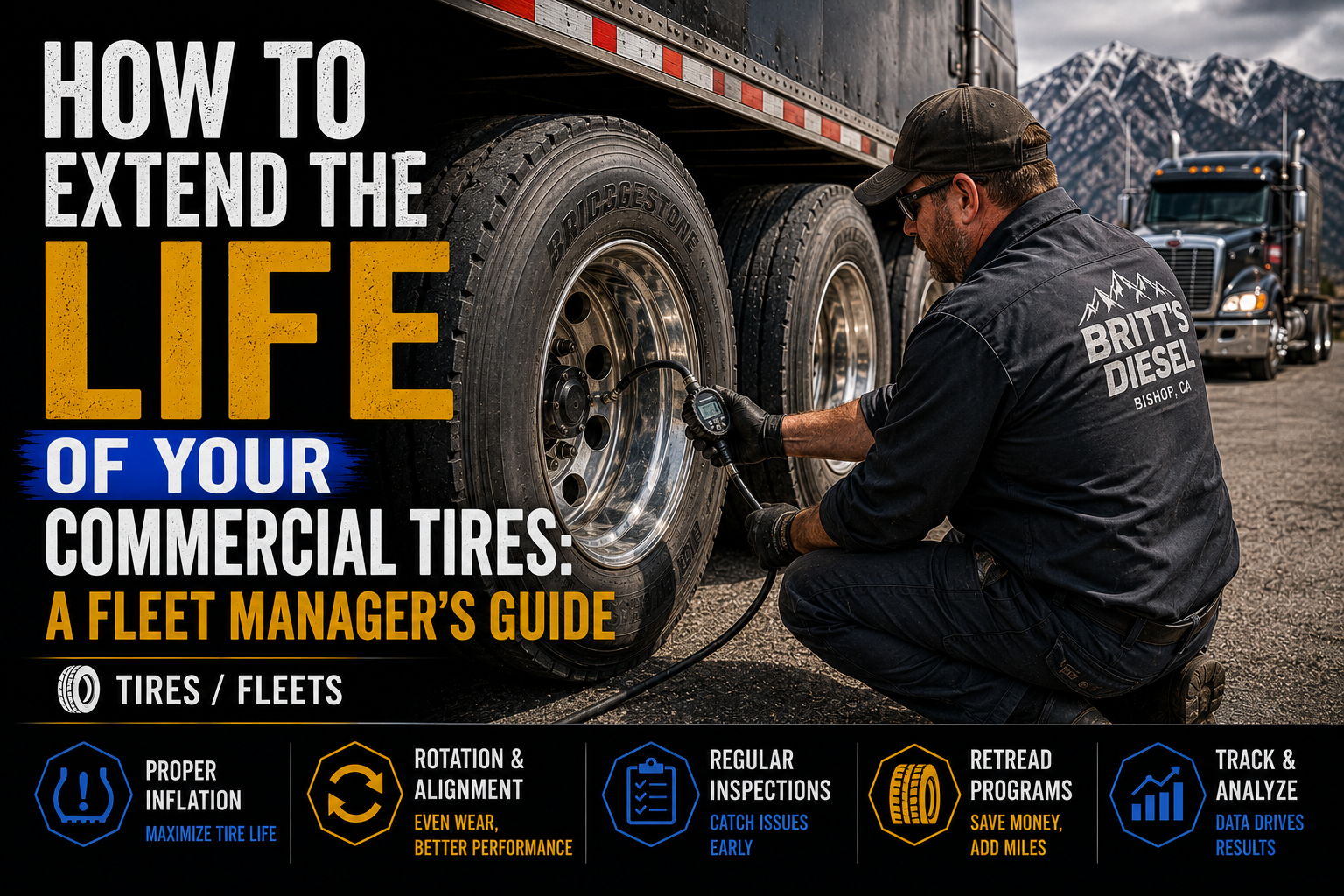
Commercial tires are one of the largest ongoing expenses for any fleet operation. A single steer tire for a Class 8 truck can cost $500 or more, and a full set across an 18-wheeler represents thousands of dollars. That's why savvy fleet managers treat tire management as a profit center, not just a maintenance line item. The goal isn't just to avoid blowouts—it's to squeeze every possible mile out of every tire on every vehicle.
Start With the Right Tire for the Job
Engineered for steering precision and even wear under constant directional load. Never substitute a trailer tire here — it's dangerous and wears abnormally fast.
Designed for traction and torque transfer. Deep, aggressive tread patterns suited for varied road surfaces and heavy loads.
Optimized for free-rolling and even load distribution across multiple axles. Using the wrong tread pattern for your terrain accelerates wear dramatically.
Here in the Eastern Sierra, vehicles frequently travel between desert floor and mountain passes — creating unique demands. Getting the spec right from the start pays dividends for years.
Inflation Is Everything
Under-inflated tires flex excessively, generating heat that degrades rubber and internal structure. Over-inflated tires wear in the center of the tread and are more vulnerable to road hazard damage. For a fleet, this means a non-negotiable daily inspection protocol:
- Every driver checks pressure before their first run of the day — tires cold.
- Document all readings. Patterns in the data reveal slow leaks and chronic problems.
- Invest in a reliable digital pressure gauge for each vehicle in the fleet.
- Consider TPMS on your highest-utilization units — real-time data catches slow leaks before they become blowouts.
Rotation and Alignment
Rotating tires moves them from high-wear positions to lower-wear positions, evening out overall wear and extending total service life. Most fleets rotate every 50,000 to 100,000 miles — consult your tire technician for the right interval for your equipment.
Alignment is equally critical. A vehicle even slightly out of alignment will scrub tires rapidly. A single misalignment event can cost thousands in premature wear if not corrected promptly. Vehicles that regularly hit curbs, potholes, or off-road terrain should be checked more frequently.
Retread Programs
A quality retread on a sound casing can cost 40–60% less than a new tire and delivers comparable performance in appropriate applications. Best suited for drive and trailer positions. Work with a certified retread supplier and inspect casings carefully before approving them.
Track It All
The best fleet tire programs run on data. Track these metrics for every tire in your fleet:
Vehicles that consistently wear tires faster than the fleet average often have alignment, loading, or driver behavior issues that can be identified and corrected — saving real money over time.
Ready to Improve Your Fleet's Tire Program?
Britt's Diesel works with fleet operators throughout the Eastern Sierra on tire spec, rotation schedules, alignment, and commercial tire repair. Located in Bishop, CA — open Monday through Friday.
(760) 872-1883MON – FRI | BISHOP, CA