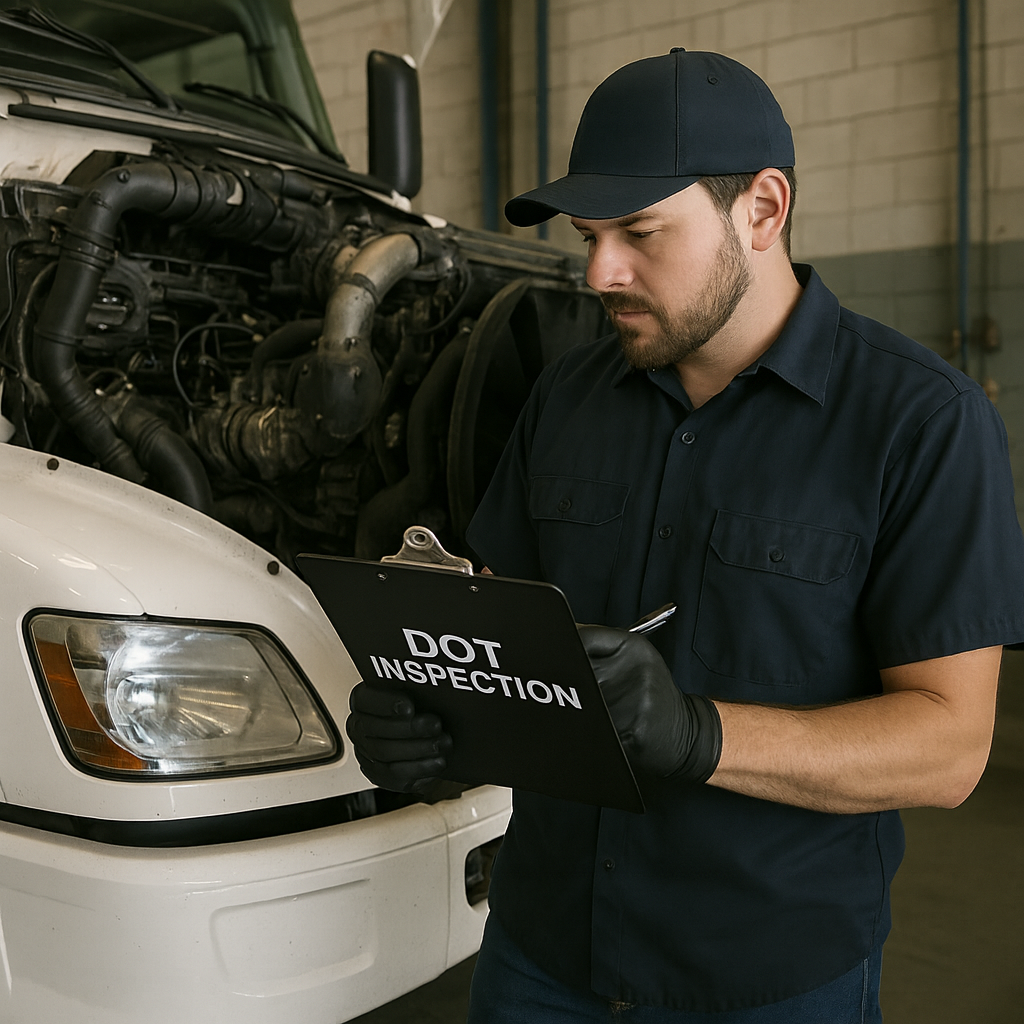
If you run commercial vehicles, passing safety inspections isn’t optional—it’s the cost of doing business. Whether you’re preparing for a federal roadside exam using a DOT inspection checklist or gearing up for California’s BIT inspection (Biennial Inspection of Terminals), the criteria overlap in all the places that matter most: vehicle condition, documentation, and driver readiness. Here’s what inspectors really focus on—and how to avoid the most common fails.
Lighting & Visibility
Lighting violations are among the easiest to spot—and the most common.
-
Headlights & high beams: Must operate and be properly aimed.
-
Turn signals & flashers: Check all corners, including trailer.
-
Brake lights & running lights: Confirm intensity and lens condition.
-
Clearance/marker lamps & reflectors: Especially critical on trailers and longer wheelbases.
-
Reflective tape & conspicuity: Ensure placement is complete, clean, and not peeling.
-
Windshield, wipers, mirrors: Look for cracks in driver’s line of sight, worn blades, loose or broken mirrors.
Prep tip: Do a full walk-around in low light with hazards on; replace bulbs and repair broken lenses before wheels roll.
Tires, Wheels & Suspension
Tires get scrutinized closely because they reveal both maintenance habits and immediate safety risks.
-
Tread depth: Meets minimums (steer tires typically need more tread than drives).
-
Sidewall condition: No cuts, bulges, exposed cords, or leaks.
-
Air pressure: Within spec; mismatched dual pressures are a red flag.
-
Wheels & rims: No cracks, elongated bolt holes, or missing/broken lugs.
-
Hubs & seals: No fresh oil sling or wet hub caps.
-
Suspension: No broken leafs, shifted packs, cracked hangers, or loose U-bolts.
Prep tip: Use a gauge, not your boot. Log pressures and any tire swaps in your maintenance records.
Brakes & Brake System
Brake defects are a top out-of-service cause.
-
Air brake leaks: With brakes released and applied, listen and soap-test leaks.
-
Slack adjusters & stroke: Within limits and equal side-to-side.
-
Drums/rotors & linings: Adequate thickness, no cracks, glazing, or contamination.
-
Hoses & lines: No chafing, kinks, rub-through, or audible leaks.
-
Parking & service brakes: Must hold on grade and stop straight.
Prep tip: Measure pushrod travel and record it—documentation shows diligence if questioned.
Records & Documentation
Even a mechanically perfect vehicle can fail if the paperwork’s a mess.
-
Driver docs: CDL, medical card, and if applicable, endorsements.
-
Hours of Service: ELD functioning, logs current, supporting documents on hand.
-
Vehicle maintenance files: Preventive maintenance schedule, repair orders, and records of annual/BIT inspections.
-
DVIRs (Driver Vehicle Inspection Reports): Recent reports and corrective actions documented.
-
Insurance & registration: Current and accessible.
-
For BIT inspection: Terminal-level records—vehicle lists, maintenance intervals, brake certifications (where required), and evidence of systematic maintenance.
Prep tip: Create a binder (physical or digital) labeled by category. Inspectors appreciate organized, easy-to-verify records.
Common Fails to Avoid
-
Burned-out lights or missing reflectors
-
Low or uneven tire tread; mismatched dual pressures
-
Air leaks, out-of-adjustment brakes, chafed hoses
-
Cracked windshield in driver’s sweep; torn wiper blades
-
Loose or missing wheel lugs; leaking hub seals
-
Missing/expired medical card, incomplete logs, broken ELD
-
Inadequate or missing maintenance/DVIR documentation
-
Missing fire extinguisher or triangles (where required)
“Staying inspection-ready isn’t about scrambling the night before—it’s about building habits that mirror the DOT inspection checklist and your BIT inspection obligations. Tighten your preventive maintenance, document the work you perform, and coach drivers on consistent pre-trips. Do that, and inspections become routine—not a roll of the dice.”Britts Diesel

Quick Pre-Trip Routine (5–8 Minutes)
- Lights on, hazards flashing: Walk around, check every lamp and reflector.
- Tires & wheels: Gauge pressures, scan sidewalls, lugs, hubs, and suspension.
- Brakes: Listen for leaks, verify parking brake set/holds; test service brakes on roll-out.
- Cab & visibility: Horn, wipers, washers, defrost, mirrors, windshield.
- Paperwork: CDL, medical card, cab cards, ELD status, prior DVIR repairs closed out.