
When you’re hauling weight or climbing grades, nothing matters more than reliable stopping power. Heavy-duty brakes are built to shed heat, resist fade, and deliver repeatable performance under load—but they only do that if you understand the components and how they work together. Here’s a practical primer on pads vs. shoes, rotors vs. drums, and hydraulics vs. air—so you can make smarter maintenance decisions and plan your diesel brake service with confidence.
Pads vs. Shoes: How Friction Gets Made
-
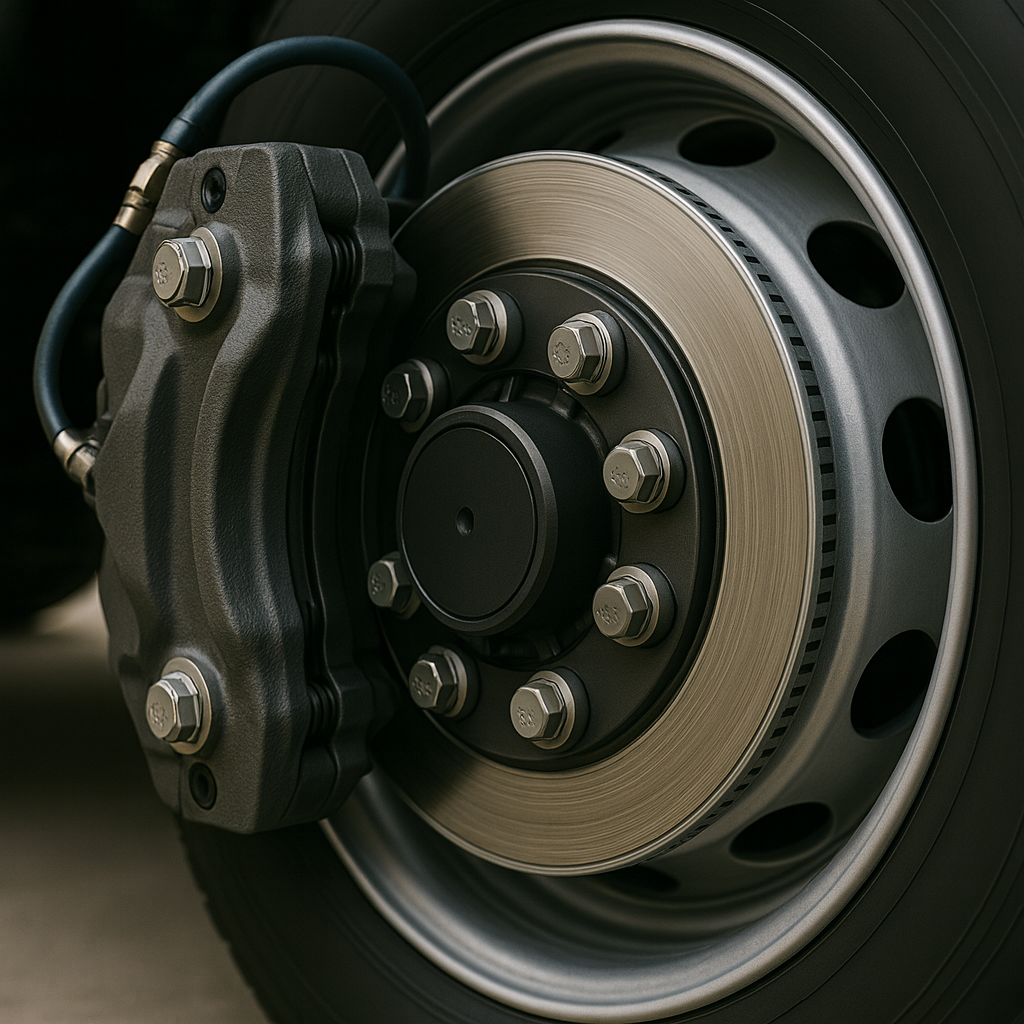
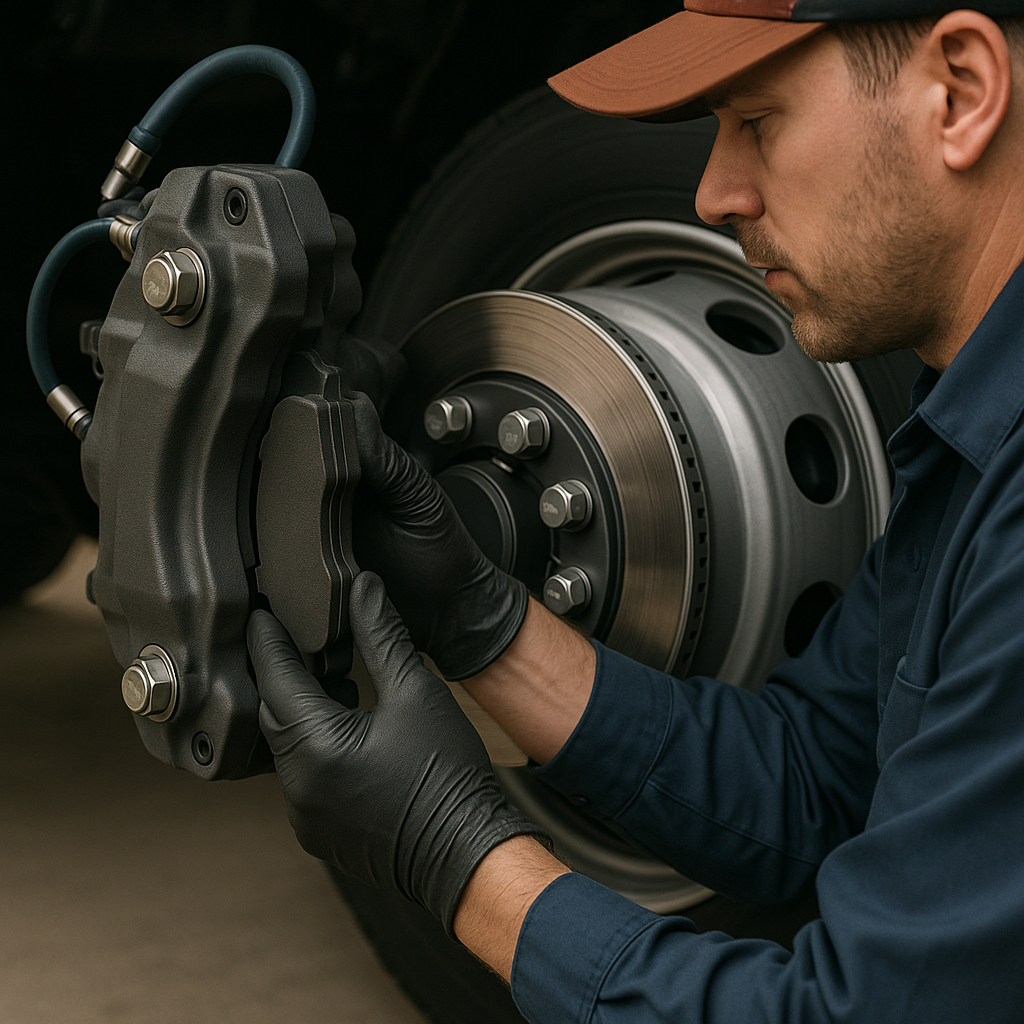
Disc brake pads clamp onto a rotor. They typically offer better heat management, shorter stopping distances, and faster recovery after repeated stops. Pads are easier to inspect and replace, and air-disc conversions are increasingly common in heavy-duty fleets for precisely these reasons.
-
Drum brake shoes expand against the inside of a drum. While drums can provide strong, progressive braking and protect components from road spray, they retain more heat and are more susceptible to fade on long descents. Shoes also rely on correct adjustment (manual or automatic slack adjusters) to maintain consistent pedal feel and stroke.
Rotors vs. Drums: Heat Is the Enemy
-
Rotors (discs) expose a lot of surface area to airflow and dissipate heat quickly. Ventilated or cross-drilled designs further improve cooling and reduce warping under repeated heavy stops. With discs, you’ll monitor pad thickness, rotor thickness/runout, and surface condition.
-
Drums enclose the friction surfaces, which can help with contamination but traps heat. Overheated drums can glaze shoes and lengthen stopping distances. Key checks include shoe lining thickness, drum diameter/out-of-round, and hardware condition (return springs, rollers, pins).
Hydraulics vs. Air: Different Ways to Apply Force
-
Hydraulic brake systems (more common on lighter heavy-duty trucks and some RVs) use brake fluid to transmit pressure from the master cylinder to calipers or wheel cylinders. They offer excellent modulation and are relatively simple but require vigilant fluid maintenance because moisture contamination lowers the boiling point and accelerates corrosion.
-
Air brake systems dominate in Class 7–8 trucks and buses. An engine-driven compressor fills reservoirs; service brakes are applied by air pressure, and spring brakes provide parking/emergency application. Advantages include fail-safe spring brakes, easy coupling for trailers, and no fluid to boil. Air systems demand routine attention to compressors, governors, air dryers, valves, lines, chambers, and slack adjusters. Leaks, improper push-rod travel, or out-of-spec stroke can all compromise stopping power.
Maintenance Priorities for Heavy-Duty Brakes
-
Friction material: Measure pad/shoe thickness and look for taper, glazing, or contamination (oil/grease). Replace before minimums—don’t wait for rivets.
-
Rotors/drums: Check for cracks, hot spots, scoring, and spec limits (thickness or max drum diameter). Address runout and out-of-round to prevent vibration and uneven wear.
-
Hardware: Replace springs, pins, bushings, and anti-rattle clips as needed. Sticking hardware creates drag and heat.
-
Adjustment: Verify automatic slack adjusters function correctly; manual adjustment should not be routine on vehicles equipped with autos—frequent re-adjustments hint at deeper issues.
-
Hydraulic health: Flush fluid on schedule, inspect hoses for swell or cracking, and ensure the booster and master cylinder are leak-free.
-
Air system integrity: Drain tanks (or confirm air dryer performance), inspect hoses/fittings for leaks, and test chamber push-rod travel. Keep water and oil out of the system to avoid valve damage and winter freeze-ups.
-
Driving & cooling: Use proper gear on descents, rely on engine/exhaust brakes when available, and avoid riding the brakes. Cooling time extends component life.
“Heavy-duty stopping power is earned, not assumed. Know your pads vs. shoes, rotors vs. drums, and whether your rig runs hydraulic or air—control heat, keep adjustments in spec, and your brakes will repay you with shorter stops, cooler components, and safer miles.”Britt’s Diesel
When to Schedule Diesel Brake Service
- Increased stopping distances or pedal travel.
- Pulling to one side, vibrations, or shudder under braking.
- Frequent need to readjust slack adjusters
- Visible cracking, overheating, or uneven wear on rotors/drums.
- Air leaks, slow build times, or moisture in reservoirs.
Understanding how pads and shoes interact with rotors and drums—and how hydraulic and air systems apply that force—helps you maintain heavy-duty brakes that are ready for real-world loads. Proactive diesel brake service reduces downtime, keeps drivers confident, and protects your most valuable assets on the road.