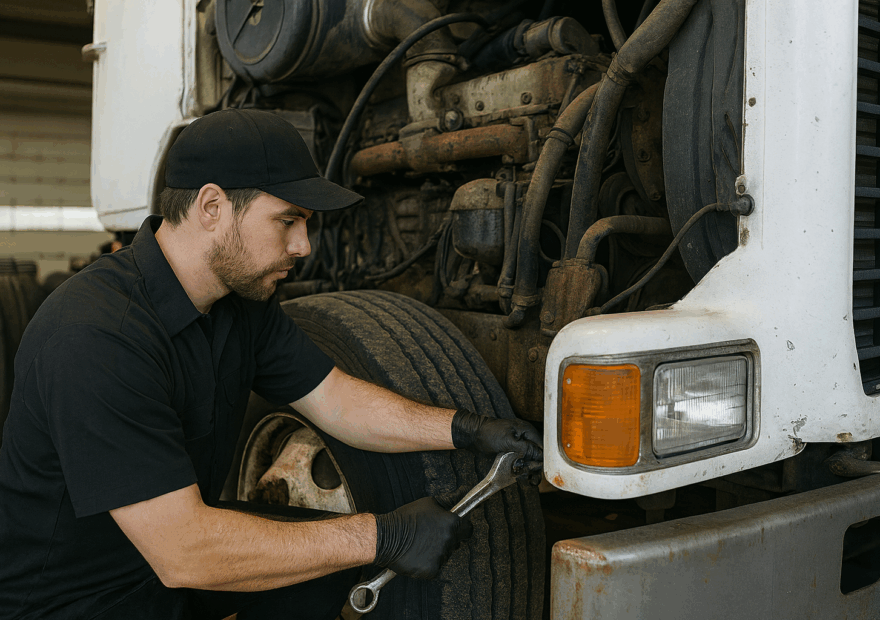

A long-awaited road trip is no time for preventable breakdowns. A little preparation goes a long way toward safety, comfort, and fuel efficiency—especially with heavy, high-torque diesel motorhomes. Use this practical guide to tighten up your diesel RV service plan so you can focus on the fun, not the fix.
1) Chassis Service: Start with the Foundation
Your chassis carries the whole house, so treat it like the priority it is.
-
Fluids & filters: Engine oil and filter, fuel filters (primary & secondary), coolant strength/level, transmission fluid, and differential/axle fluids. Top off power steering and windshield wash.
-
Cooling system: Inspect belts, hoses, clamps, surge tank, and radiator fins. Overheating on grades is often a hose or belt away.
-
Brakes: Verify pad/shoe life, rotor/drum condition, and look for fluid leaks. Check parking brake function.
-
Suspension & steering: Grease fittings, inspect bushings, shocks, and steering linkages. Excess play becomes exhausting over hundreds of miles.
-
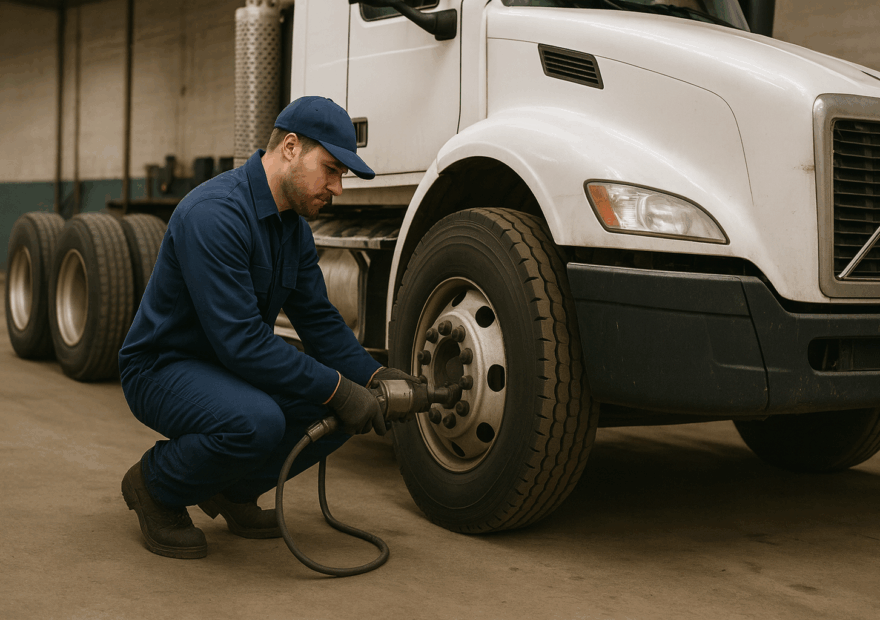
Tires & wheels: Measure tread depth, set cold pressures to the load chart (including the toad), and torque wheel nuts. Don’t forget the spare condition and jack points.
-
Driveline: Check U-joints, carrier bearing, and spline lubrication on longer wheelbases.
2) Air Systems: Brakes, Ride, and Accessories
Most diesel pushers rely on air—both for braking and ride quality.
-
Air brakes: Drain tanks to purge moisture, confirm compressor cut-in/cut-out pressures, and watch for pressure decay with brakes applied (per your manual). Listen for leaks at lines, fittings, and glad-hands for towed setups.
-
Air dryer & governor: Replace desiccant on schedule; a saturated dryer invites water into your brake system.
-
Air ride suspension: Verify ride-height valves and air springs for cracks or dry rot. Proper height protects driveline angles and ensures stable handling.
-
Aux air: If you run air horns, step, or generator enclosures from the system, check those circuits for slow leaks that can drain pressure overnight.
3) Leveling Systems: Stable and Stress-Free
A solid park is safer, quieter, and kinder to your coach.
-
Hydraulic leveling: Cycle jacks, check fluid level and lines, and inspect footpads. Carry jack pads for soft ground.
-
Air leveling: Calibrate ride-height sensors and verify manual control works. If the coach won’t hold level, track down bag or valve leaks before departure.
-
Frame & coach integrity: Leveling reduces torsional stress on cabinets, doors, and slides—so fix the system now to prevent squeaks and binding later.
4) Coming Out of Storage: Wake-Up Routine
If your motorhome has been sitting, take these extra steps before you roll:
-
Batteries: Charge fully, clean terminals, and load-test both chassis and house banks.
-
Fuel: Top off with fresh diesel and a quality conditioner to combat algae and moisture.
-
Seals & weatherstrip: Inspect slide, window, and roof penetrations; reseal if cracking is visible.
-
Rodent & moisture checks: Look for nests, chewed wiring, and damp areas in bays and under cabinetry.
-
Generator & appliances: Exercise the genset under load (A/Cs, microwave) and replace its oil/filters per hours.
-
Tires again: Look for flat-spotting and sidewall checking; re-verify pressures after the coach is fully loaded.
“Long trips run smoothest when the basics are buttoned up—chassis, air systems, leveling, and post-storage checks. That’s the core of smart diesel RV service and motorhome maintenance.”Britts Diesel

Quick Pre-Trip Checklist
- Scales: Weigh each axle (and ideally each corner) to set motorhome maintenance baselines and tire pressures.
- Alignment: A fresh alignment saves tires and attention.
- Spares: Carry belts, fuel filters, coolant, DEF (if equipped), and a basic tool roll.
- Lights: Confirm every exterior light and backup camera; clean lenses for maximum visibility
- Emergency kit: Reflective triangles, air gauge, nitrile gloves, headlamp, and quality torque wrench.
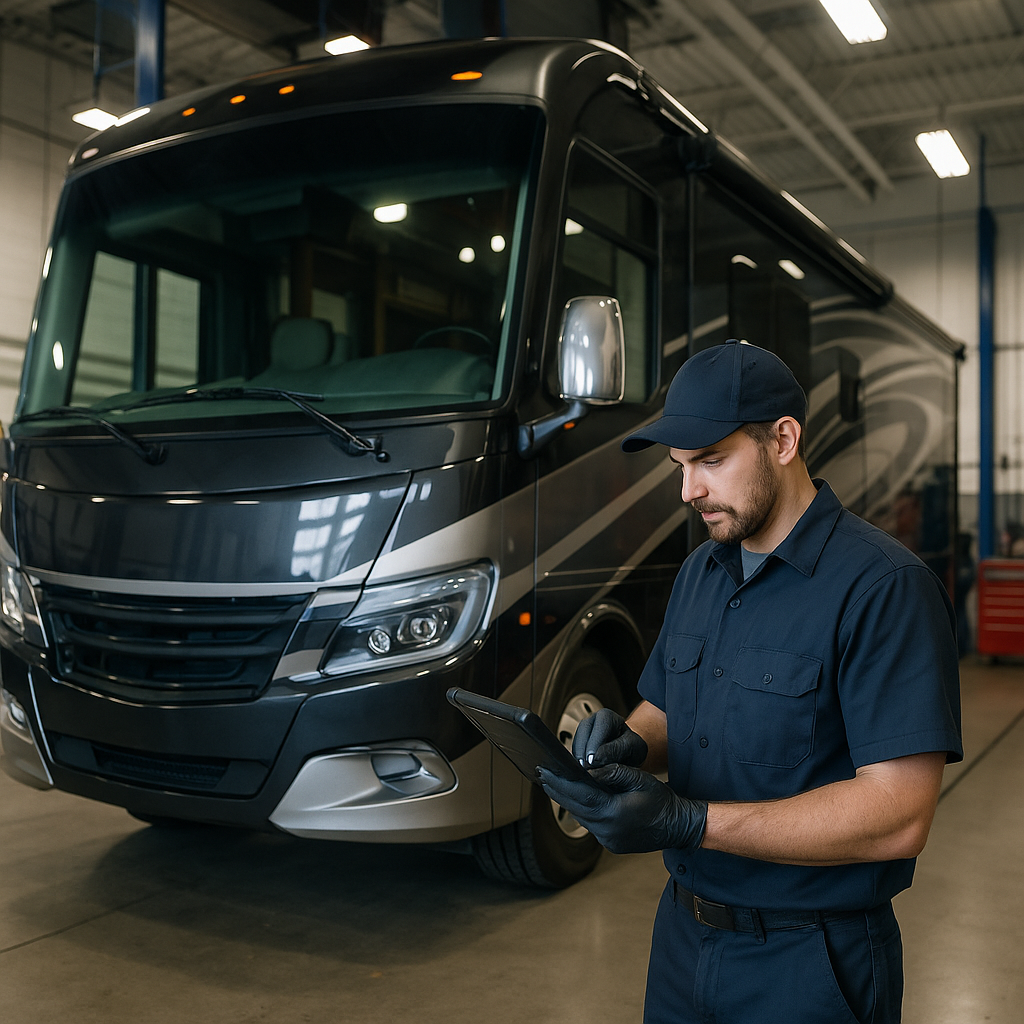
Getting these essentials right turns a good vacation into a great one. If you’d rather hand the heavy lifting to pros, schedule a comprehensive diesel RV service—including chassis inspection, air-system diagnostics, leveling check, and post-storage refresh—so your only worry is where to camp next.