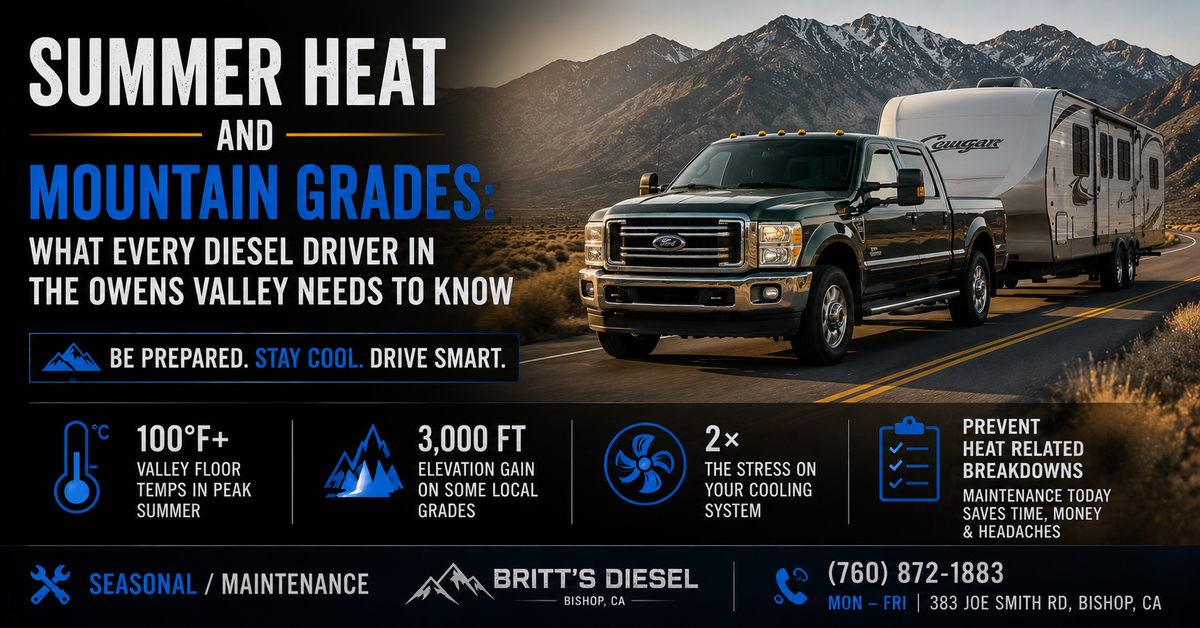
Summer in the Owens Valley is no joke. When the thermometer pushes past 100°F on the valley floor and you're pulling a load up the grade toward Mammoth or coming down from Deadman Summit, your diesel is working in conditions it was never designed to take lightly. Heat is an engine's worst enemy — and this time of year, it's everywhere.
Why Summer Is Different Here
Bishop sits at around 4,100 feet, but the roads we all drive don't stay flat. US-395 climbs and drops constantly — Conway Summit to the north, the Sherwin Grade to the south, and everything in between. If you're headed to Mammoth, you're climbing. If you're hauling gear into the backcountry, you're climbing. That combination of high ambient temperature and sustained uphill load is exactly what pushes diesel engines and cooling systems to their limits.
The Systems Summer Punishes Most
Your coolant, radiator, thermostat, and water pump are working overtime when ambient temps are high and you're under load. A cooling system that's marginal in winter will fail in summer. Check coolant level, condition, and mixture — and have the system pressure-tested if it's been a while.
Towing uphill in heat is one of the fastest ways to cook transmission fluid. Burnt, degraded fluid loses its ability to protect internal components. If your fluid is dark or smells burnt, don't wait — a transmission flush is cheap compared to a rebuild.
Turbos run extremely hot under load, and in summer that heat has less ambient air to dissipate into. Always let your engine idle for a few minutes before shutting down after a hard pull — a turbo timer is cheap insurance against coking the bearings.
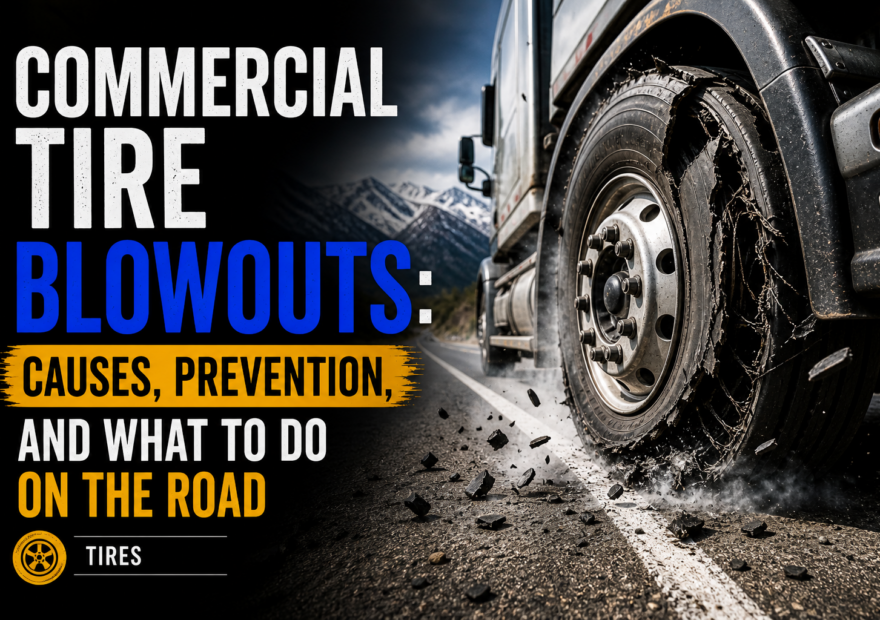
Hot pavement plus a loaded trailer plus an underinflated tire is a blowout waiting to happen. Check pressure in the morning before the day's heat builds — and inspect for sidewall cracking that worsens in UV and heat exposure.
Your Summer Pre-Season Checklist
Before you're deep into summer driving season, run through these basics. Most of them take minutes and can prevent hours of trouble.
- Coolant flush and pressure test — if you haven't done it in the last two years, do it now.
- Transmission fluid check — color and smell tell you a lot. Dark brown or burnt means it's time.
- Belts and hoses — heat accelerates cracking and degradation. Look for soft spots, bulges, and fraying.
- Engine oil level and condition — heat thins oil faster. Don't push your interval in summer.
- Battery test — heat kills batteries as surely as cold does, and summer heat is harder on them than many realize.
- Tire pressure and sidewall inspection — check cold, every morning during towing season.
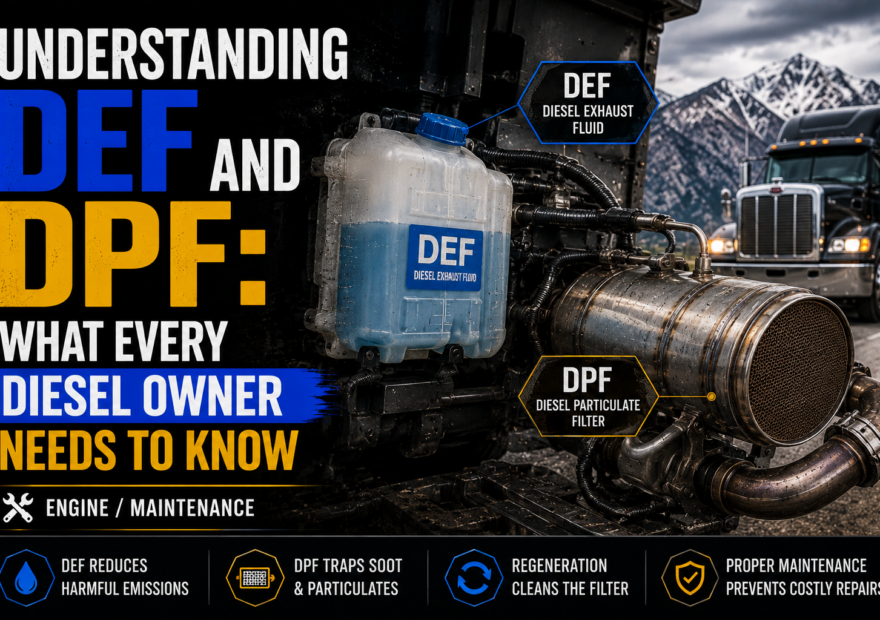
- DEF level — DEF degrades faster in heat. Don't store it in direct sun or a hot truck bed.
Temperature gauge climbing above normal, a sweet smell from the engine bay (coolant), sluggish power on a grade, transmission slipping or hesitating — none of these are "wait and see" situations in summer. Pull over safely, let the truck cool, and call us. Getting towed from Bishop is better than getting towed from the middle of nowhere on 395 at 3 p.m. in July.
A Word About Mountain Driving
Coming down the grade is just as hard on your truck as going up. Engine braking and downshifting are your friends on long descents — riding the service brakes all the way down overheats the rotors and pads fast, especially with a load behind you. If your brakes smell hot at the bottom of a grade, you've been working them too hard.
The Eastern Sierra is one of the most beautiful places to drive in the country. We want you to enjoy it — not spend a summer afternoon waiting for a tow on the side of 395 with your hood up and your hazards on. A little prep goes a long way out here.
Get Your Diesel Summer-Ready
Britt's Diesel is right here in Bishop, and summer is our busiest season for a reason. Whether you need a cooling system check, a transmission service, a tire inspection, or a full pre-season once-over — we've got you covered. Open Monday through Friday at 383 Joe Smith Rd.
(760) 872-1883MON – FRI | 383 JOE SMITH RD, BISHOP, CA